

The lessons that actually move the needle and why they feel almost too simple to be true.
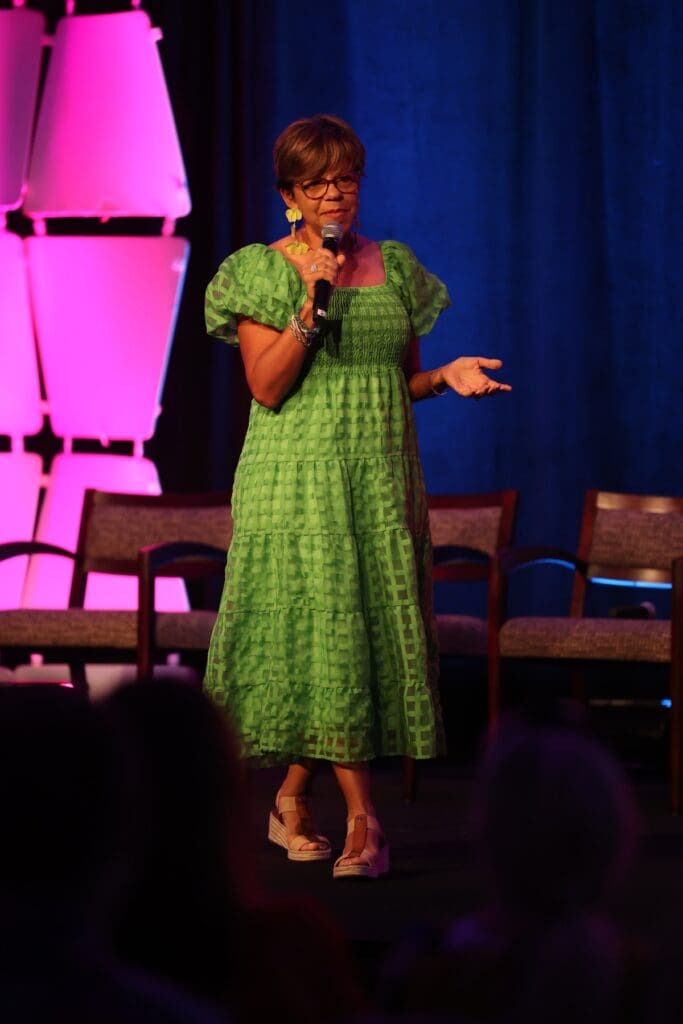
Let me tell you what three decades of sales conversations will teach you that no certification, training binder, or weekend workshop ever will.
Not because the courses are bad. But because most of what actually works in sales can’t be packaged neatly into a module. It lives in the messy, human, emotionally-charged space between you and another person.
I’ve sold face-to-face, on the phone, over Zoom, from stages, in coffee shops, and in hushed conversations in dance class waiting rooms. I’ve had deals fall apart in the final hour, and prospects circle back two years later, ready to buy. And after all of it, here’s what I know to be true:
Sales isn’t something you do to people. It’s something you do with them. The moment you forget that, you’ve already lost.
It’s also the foundation for selling anything without being pushy.
These five lessons are the ones I wish someone had handed me at the start. They’re also the ones I still come back to every single time I feel a conversation getting off track.
1. How to Handle Sales Objections: The First One Is Rarely
the Real One
Here’s what most salespeople do when someone says “I need to think about it” or “it’s not the right time”: they either fold completely or launch into an objection-handling script they memorized from a training call.
Both are wrong moves.
The first objection is almost always a smokescreen. It’s what someone says when they’re not ready to tell you what’s actually stopping them. Maybe it’s fear of failure, or a spouse they need to convince. Maybe it’s that they don’t fully trust themselves to follow through, and that feels too vulnerable to say out loud.
So instead of panicking, lean in. Get genuinely curious. Ask one more question. “What would make this feel like an easy yes?” Or simply: “What’s the real hesitation?”
The people who feel seen in that moment? They buy. The people who feel handled? They ghost.
Don’t freak out. Lean in. The real conversation starts after the first objection.
2. Why Buyers Choose Connection Over Credentials in Sales Conversations
This one took me longer than I’d like to admit.
Early in my career, I thought selling was about showing up prepared, knowing the product inside out, and having all the answers. I was performing competence like my life depended on it.
What I was actually doing was making the conversation about me.
The shift happened when I stopped trying to impress prospects and started trying to understand them. Not their surface-level problem, but the thing underneath it. The fear. The hope. The thing that would actually change if they said yes to this.
Here’s what nobody tells you: people are not buying your product. They’re buying the version of themselves that has the result your product creates. And they will only believe that version is possible if they feel like you actually see them.
Research published in the Harvard Business Review confirms it: appearing self-centered and failing to build personal rapport are among the top reasons salespeople don’t close deals. It’s not the product. It’s not the price. It’s the conversation.
Stop performing. Start listening. Your conversion rate will thank you.
You cannot out-impress a genuine moment of being truly understood.
3. How to Follow Up on Sales Without Feeling Pushy or Annoying
Raise your hand if you’ve ever felt like a nuisance for sending a follow-up message. (I know. Me too. Especially at the beginning.)
Here’s the reframe that changed everything for me: your follow-up is only annoying if it’s about you.
If your follow-up is “hey, just checking in!” Yes, that’s annoying. It adds zero value and puts the burden on the other person to do the emotional labor of responding.
But a follow-up that says “I was thinking about what you shared about your team retention struggles, and I came across something that might actually help….”? That’s a service. That’s you continuing to show up for them, even before they’ve committed.
Timing and values matter. The follow-up that lands is the one that reminds someone why they were interested in the first place and gives them a low-pressure reason to re-engage.
You’re not pestering people. You’re reminding them that this door is still open.
Silence after a conversation isn’t a no. It’s an invitation to follow up with something worth saying.
4. How to Close a Sale Naturally (Without a Script or Pressure Tactics)
If you’ve ever felt awkward “going for the close,” it’s almost always because something earlier in the conversation was left kinda weird.
Sales conversations that end in a natural yes share a few things in common: the problem is specific and personal (not generic), the solution is clearly connected to that specific problem, and next steps are discussed before the end of the call, not in a panic at the last minute.
Get personal. What is this person’s actual situation? Not the surface problem, the real one.
Get clear. Does she understand exactly what working together looks like, what it costs, and what changes?
Gain agreement along the way. Not in a manipulative “yes ladder” way, but by genuinely checking in. “Does that land for you?” “Does this feel like what you’re looking for?”
When those three things happen, the close isn’t a performance. It’s just the next logical step of an honest conversation.
The close isn’t the moment you push. It’s the moment everything you’ve built together clicks into place.
5. Why Your Energy Is Your Most Powerful Sales Tool
This is the one that’s hardest to hear, so let’s just say it plainly: if you’re anxious going into a sales conversation, your prospect feels it. If you’re performing enthusiasm you don’t actually feel, she feels that too.
Anxiety closes nothing. Fake urgency closes nothing. What closes conversations, what actually creates the internal “yes” in another person, is calm confidence.
Not arrogance. Not pressure. Calm confidence.
The kind that comes from knowing your offer is genuinely good, knowing the person in front of you has a real problem, and knowing that whether she says yes or no today, you’re going to be completely fine either way.
That energy is disarming. It creates safety. And people do not buy when they feel unsafe — they buy when they feel like the person selling to them is steady, honest, and not going to collapse if they push back.
This isn’t intuition, it’s science. Peer-reviewed research on emotional contagion shows that emotions transfer between people in conversation through facial cues, tone of voice, and body language, often without either person realizing it’s happening. Your anxious energy doesn’t stay with you. It moves.
Regulate your nervous system before you get on the call. Not as a woo woo exercise, but as a strategic one.
Calm confidence isn’t a personality type. It’s a sales strategy. And it’s the most effective one there is.
How to Apply These Sales Lessons Starting Today
You could read this and think, “These are so simple.” And you’d be right. They are simple. They are also, in my experience, the exact things most people blow past in their rush to learn the next tactic, the next script, the next system.
Simple isn’t the same as easy. Implementing these five things, really implementing them, not just nodding and moving on, will do more for your sales results than almost anything else you could learn.
Start with the one that made you wince a little. That’s your work.
Want to go deeper?
If the energy piece resonated, you’ll want to read: Building Sales Confidence as a Female Entrepreneur, which is the full breakdown of what nervous-system regulation has to do with your conversion rate.
If the objection piece hit home, check out: [link: What to Do When Your Prospect Says “I Need to Think About It”] — a practical look at getting to the real conversation.
And if you’re ready to build a sales practice that actually feels like you, without the pressure, without the scripts, without the ick, the Sales Confidence Studio was built for exactly that.
If you liked these simple tips, get small weekly sales shifts right in your inbox that will grow your sales one small shift at a time.
You’re closer than you think.
© Genevieve Skory. All rights reserved.
www.gskory.com
Leave a Reply
5 Sales Lessons from 30 Years of Selling That Nobody Puts in a Course
5 Sales Lessons from 30 Years of Selling That Nobody Puts in a Course
5 Sales Lessons from 30 Years of Selling That Nobody Puts in a Course


COMMENTS